
You publish a blog post. Three weeks later, a client asks 'have you seen yourself in ChatGPT lately?' - and you have no idea. Welcome to the AI search visibility blind spot.
The fix is a tracking panel - a way to monitor whether ChatGPT, Claude, Perplexity, Gemini and Copilot are citing your business in their answers. Four paid tools dominate this space in 2026: Profound, Otterly.AI, Peec AI and AI Brand Lens. Together they cost between 100 and 500 USD per month. Below is the honest comparison, including when a free manual panel beats every paid tool on the market.
This post is the measurement chapter of the GEO playbook we published last week. The pillar shows you how to be cited. This one shows you how to verify whether the work worked.
What does an AI search tracking tool actually measure?
An AI search tracking tool runs a fixed set of queries against AI assistants on a schedule, captures each AI's answer, and parses out which sources got cited. The output is a dashboard of metrics: citation share, prompt visibility, sentiment, source diversity, and share of voice. Underneath the dashboard, every paid tool does roughly the same thing through a mix of API calls and headless browser automation.

The five metrics that matter:
- Citation share - of all sources cited across your tracked prompts, what percentage are yours
- Prompt visibility - count of queries where your domain appears at least once
- Sentiment - mentions in praise vs criticism vs neutral context
- Source diversity - how many distinct AI platforms cite you (one tool citing you across four platforms beats a single platform citing you ten times)
- Share of voice - your citation share against three to five named competitors on the same queries
The differentiation between paid tools is in coverage, prompt-set sophistication and reporting depth. The dashboards look the same; what they sit on top of is not.
The four AI search tracking tools that matter in 2026
Four products have separated from the pack: Profound, Otterly.AI, Peec AI, and AI Brand Lens. Pricing ranges from 100 to 500 USD per month, with Profound targeting enterprise budgets and the others fitting SMB and agency tiers. Here is the at-a-glance comparison before the deep dives.
| Tool | Best for | Starting price (USD/mo) | Free trial | Platforms tracked | Czech market fit |
|---|---|---|---|---|---|
| Profound | Enterprise + agencies | ~500 | No | ChatGPT, Claude, Perplexity, Gemini | International only |
| Otterly.AI | SMB + freelancers | ~100 | Yes | ChatGPT, Perplexity, Gemini | International only |
| Peec AI | Mid-market | ~200 | Limited | ChatGPT, Perplexity | International only |
| AI Brand Lens | Agencies tracking clients | ~150 | Yes | ChatGPT, Claude, Perplexity | International only |
| Manual panel (DIY) | Solo + agency starters | 0 | n/a | All major AI assistants | Native CZ-friendly |
A note on review depth before the per-tool sections. We have not paid for Profound's full tier. Our review draws on Profound's public documentation, the pilot they ran on us during their 2025 outreach, conversations with three Czech agency operators who use Otterly.AI, and Kosmoweb's own internal manual prompt panel that we have run since December 2025. We mention this because GEO content that admits its own limits seems to win citations over content that does not.
Is Profound worth the money?
Profound is an enterprise-grade AI visibility platform that tracks citation share across ChatGPT, Claude, Perplexity and Gemini. It costs around 500 USD per month at entry and is best for in-house marketing teams at companies with measurable AI revenue exposure - not freelancers, not small agencies.
The strength: prompt-set engineering. Profound treats the question of 'what should you track' as a discipline. They will help you build a prompt panel of 200 to 500 queries scoped to your sales funnel, refresh it monthly, and surface drift before it reaches your dashboard. That is the actual product. The dashboard is downstream.
The weakness for our market: enterprise-only pricing. At 500 USD per month, Profound is hard to justify for a Czech agency under 1 million CZK annual revenue. Profound knows this and is not chasing the segment. If your AI-attributable revenue is six figures USD or above, Profound earns its keep faster than its competitors. Otherwise, look elsewhere.
Visit: tryprofound.com
Should small agencies use Otterly.AI?
Otterly.AI is the SMB-friendly entry into AI citation tracking. It starts around 100 USD per month with a free trial, tracks ChatGPT, Perplexity and Gemini, and provides citation share plus sentiment analysis. Best for freelance consultants and small Czech agencies tracking 20 to 50 queries in English.
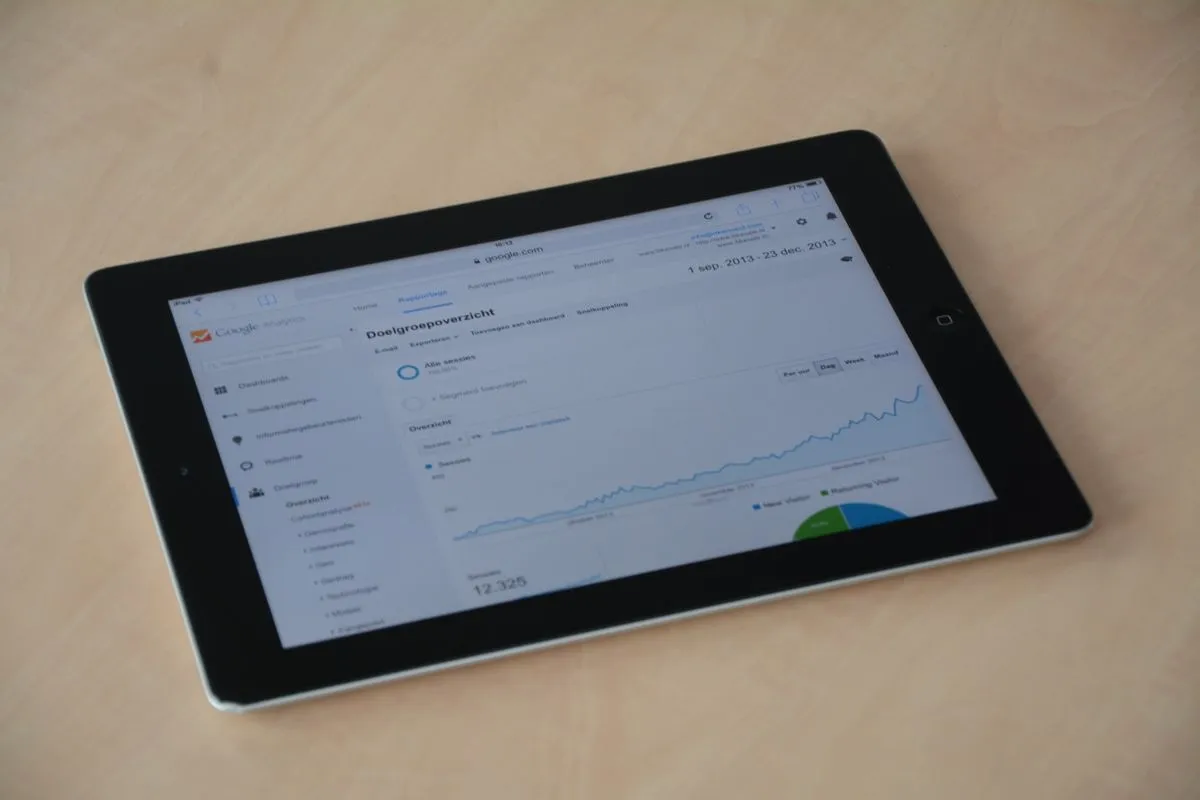
The strength: pricing and the free trial. You can be live in fifteen minutes, on no commitment, with a 20-prompt panel and weekly automated reports. The interface assumes you are not a data scientist, which is the right call for the segment.
The weakness: no Claude tracking and shallow share-of-voice. Otterly's competitor comparison maxes out at three named brands - fine for a vertical market, limiting for an agency comparing itself against ten regional rivals. Claude's absence will be a problem once Claude search-grounding adoption catches up to ChatGPT's - probably during 2026.
Visit: otterly.ai
Where does Peec AI fit?
Peec AI sits in the mid-market between Otterly and Profound. It starts around 200 USD per month, tracks ChatGPT and Perplexity, and emphasizes structured-data context - showing not just whether you were cited but which Schema.org types contributed to the citation. Best for technical teams that want to debug why a competitor wins a query.
The strength: schema context. Peec is the only tool of the four that surfaces which Schema.org type (FAQPage, HowTo, Article) likely triggered the citation. For teams already invested in structured data work, this closes the diagnostic loop - you can see the schema effort paying off in AI citations.
The weakness: only two platforms tracked. Missing Gemini and Claude in 2026 is a meaningful coverage gap. If a chunk of your audience uses Gemini through Google Workspace or AI Overviews, Peec's data will be incomplete.
Visit: peec.ai
Is AI Brand Lens worth a look?
AI Brand Lens is an agency-focused tracker that bundles multi-client management. It costs around 150 USD per month, tracks ChatGPT, Claude and Perplexity, and includes a white-label client report feature. Best for marketing agencies tracking 5 to 30 client brands on the same dashboard.
The strength: multi-client architecture. Other tools require you to spin up a separate workspace per client. AI Brand Lens is built around the agency operating model - one login, dozens of brands, branded PDF exports for each.
The weakness: smaller prompt-set limits per client. The 150 USD plan caps each client at 25 prompts, which gets tight for clients with broad keyword footprints. For agencies running monthly reports on small clients, the trade is fine. For deeper engagements, you will outgrow it within a quarter.
How do you track AI citations without paying for a tool?
The free DIY method takes thirty minutes to set up and twenty minutes a week to run. You query ChatGPT, Claude, Perplexity, Gemini and Microsoft Copilot manually against a fixed prompt panel, log citations in a spreadsheet, and monitor server logs (or Cloudflare's AI Crawl Control) for AI crawler hits. This beats every paid tool below ten queries and is the only way to track Czech-language citations reliably in 2026.
Step by step:
- Write your ten target queries. Phrase them like a real user. 'Best web agency Prague', 'how much does an MVP cost', 'wordpress vs custom website'. List in a spreadsheet with columns for each AI.
- Open free accounts on all five assistants. ChatGPT, Claude.ai, Perplexity, Gemini, Microsoft Copilot all support web-grounded queries on free tiers. Bookmark each.
- Run each query on each platform weekly. Pick a fixed day - we use Mondays. Record yes/no for citations, plus the cited URL. Twenty minutes total.
- Check server logs for AI crawler hits. Filter for GPTBot, ChatGPT-User, OAI-SearchBot, ClaudeBot, PerplexityBot, Perplexity-User. Their presence on your top pages confirms AI assistants are reading you. If they are absent, fix robots.txt before anything else - the technical SEO checklist covers the AI crawler access setup in detail.
- Track referrer traffic. In Google Analytics or Plausible, segment traffic by referrer. Look for chat.openai.com, perplexity.ai, copilot.microsoft.com, gemini.google.com. This is real conversion-stage signal - a user clicked through to your site after seeing the AI cite you.
This is the method we ran on kosmoweb.cz before publishing any of the GEO content. The first signal we caught - PerplexityBot hitting our pricing page weekly - showed up before any paid tool would have surfaced it.
How do we use AI tracking at Kosmoweb?
We track twelve queries weekly. Six in Czech, four in English, two in Russian. Each Monday morning, twenty minutes, the founder runs the panel by hand. The output feeds into our internal changelog, the same one referenced in the GEO playbook, which projected our composite GEO score from 60 to 82.
Why not pay for a tool? Three reasons. First, all four paid tools index global English queries; Czech-language tracking is the bulk of our use case and the tools simply do not support it well. Second, twelve queries weekly does not justify 100 USD per month - the math comes in around 20 USD per useful data point if we used Otterly. Third, the manual process surfaces qualitative signal the dashboards miss - we read the AI's actual sentence, not just the citation tag, and the wording matters more than the count.
When would we switch? At thirty queries weekly, manual tracking gets sloppy. At fifty, you need automation or you skip queries. Until then, the spreadsheet wins.
Which AI tracking tool should you pick?
Pick by where you sit in the funnel:
- Solo consultants, small agencies under 10 queries to track: use the free DIY method. Otterly's free trial is a useful tour but rarely worth the post-trial subscription at this scale.
- SMBs and freelancers tracking 10 to 30 queries, English-language only: Otterly.AI. Cheapest, easiest to start, sentiment is solid.
- Technical teams debugging schema work: Peec AI. The schema-type attribution is unique.
- Marketing agencies serving 5+ clients: AI Brand Lens. Multi-client architecture saves real time.
- Enterprises with measurable AI-attributable revenue (mid-six figures USD and up): Profound. The prompt-engineering layer is what you are buying, not the dashboard.
- Czech-language-first businesses: manual panel. As of mid-2026, no paid tool tracks Czech native-language citations reliably.
If you want to know whether AI assistants are citing your business right now and would rather not subscribe to anything, book a free 15-minute GEO check. We will run our internal panel on your domain, share what we find, and tell you whether a paid tool is worth your time at your current scale. No proposal attached - the offer in the GEO playbook stands.
Frequently asked questions
Do I need a paid AI tracking tool, or can I do this manually?
For under ten target queries, manual tracking wins - twenty minutes a week covers ChatGPT, Claude, Perplexity, Gemini and Copilot. Paid tools become worth their cost around 30+ queries or when you need automated alerts on citation share drops. Most small businesses overspend on these tools in the first six months.
Which AI search tracking tool is cheapest?
Otterly.AI starts at ~100 USD per month with a free trial. Peec AI is around 200 USD per month. Profound starts around 500 USD per month, enterprise-targeted, with no public free tier. For zero-budget tracking, build your own panel - all five major AI assistants offer free tiers that handle weekly manual queries.
Do any AI tracking tools work for Czech-language queries?
Not natively in 2026. Profound, Otterly.AI and Peec AI all index global English-language prompts. You can submit Czech queries, but the tools were not tuned for Czech entity recognition. The manual DIY method is the only reliable way to track Czech-language AI citations right now. We track Kosmoweb's Czech queries this way.
How often should I check AI citation tracking?
Weekly cadence is the right baseline. AI assistants do not change their citations daily - they shift based on training cycles (months) and live retrieval index updates (days). Weekly checks catch meaningful drops without producing noise. Monthly is too slow. Daily is unnecessary anxiety.
Can these tools tell me why a competitor is being cited and I am not?
Partially. They can show that a competitor's URL is cited and yours is not - that is the easy part. They cannot reliably tell you why. The why usually comes down to brand entity strength (Wikidata, Reddit, agency directories), schema completeness, and direct-answer paragraph structure - which you diagnose by hand or with a GEO audit.
Is referral traffic from chat.openai.com a reliable signal?
Yes, increasingly. Referrer headers from chat.openai.com, perplexity.ai and copilot.microsoft.com show up in Google Analytics, Plausible and most analytics tools. It is a lagging signal - it confirms citations after they convert to clicks - but it is real, free, and the only first-party data point not gated by a paid tool.
The bottom line
The four paid AI tracking tools each have a clear best-fit segment. Profound for enterprises with AI-attributable revenue. Otterly for SMBs running on English. Peec for technical teams debugging schema impact. AI Brand Lens for agencies. Everyone else - and every Czech-language business in 2026 - should run the free manual panel before subscribing to anything.
The thirty-minute setup of the free method is the highest-ROI hour you will spend on AI visibility this quarter. If after a month of manual tracking you find yourself in the 30+ queries per week range, by all means upgrade. Until then, no tool will give you a clearer signal than reading the AI's actual sentence with your own eyes.
If you want a second pair of eyes on your AI visibility, we run free 15-minute GEO checks. We will run our panel on your domain, point out where you are losing citations to competitors, and tell you the top three things to fix. No proposal, no pitch - the same offer as in the GEO playbook.